UK Winter Energy Outlook: Lights On, Bills Up in January
The UK winter energy outlook is the story that kept popping up for me this week, and the headline is a comforting one: the lights will stay on. Britain’s grid operator and its gas network both published their winter reports this week. I read them, then went looking at what they mean for a normal household bill, because the two are not the same question.
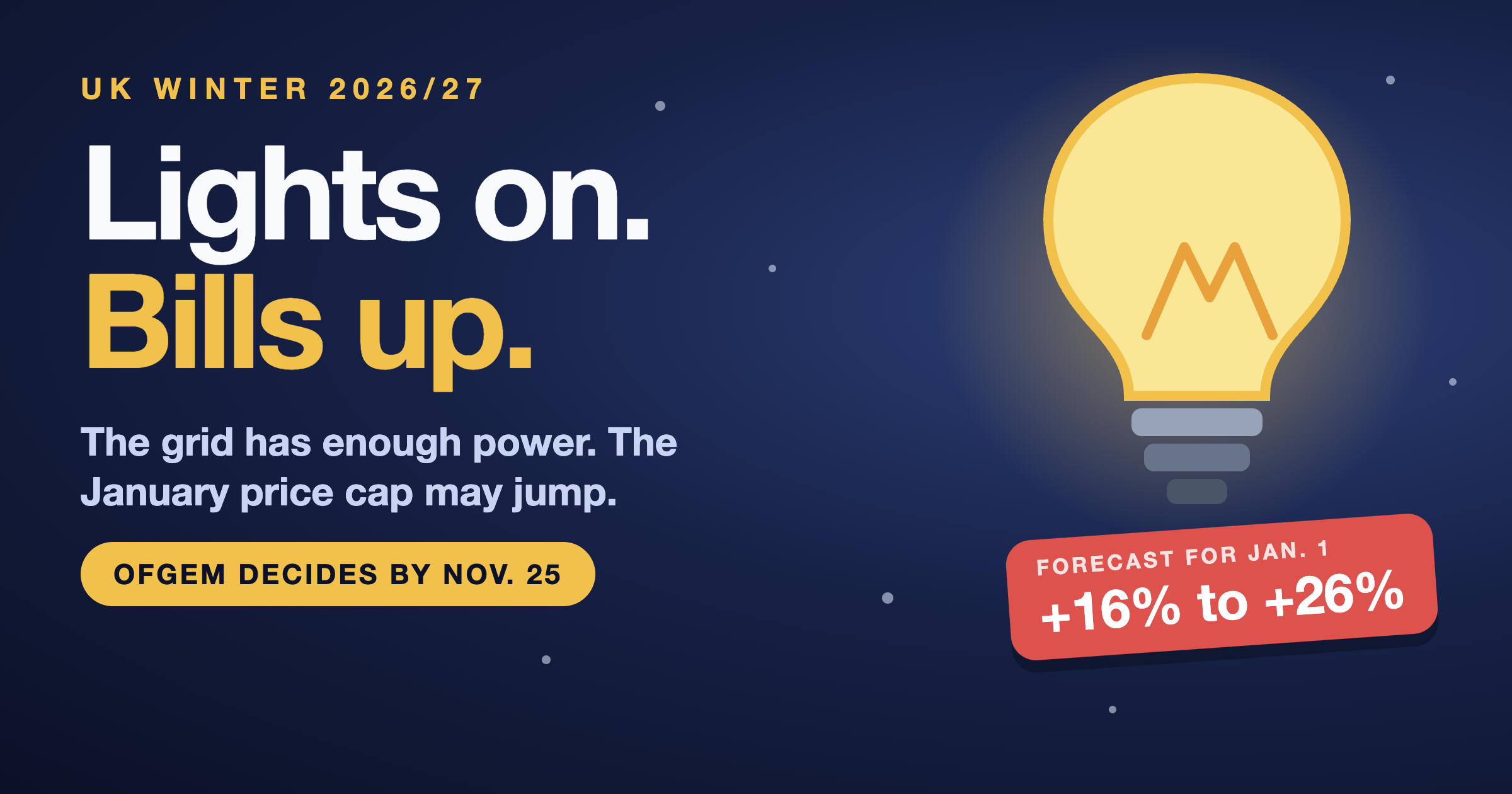
Here is the short answer. Supply looks fine, but the price is another story. I wrote this on Saturday, Oct. 24, and the January figures below are forecasts, not Ofgem’s decision. Ofgem confirms the real number by Nov. 25.
UK winter energy outlook: what the grid operator said
The National Energy System Operator (NESO) runs the electricity grid. Its winter outlook expects a spare margin of 5.9 GW at the coldest peak, about 9.5% above peak demand. NESO says that is broadly in line with recent winters. It tested 30,000 weather and supply scenarios to get there.
Also, the margin looks bigger than in June, when NESO’s early view said 5.5 GW (8.8%). NESO says that is down to a better method, not a better outlook. Drax’s summary of the June report pointed to mid to late January as the most likely time for tight days.
Meanwhile, the BBC reports that National Gas, which runs the gas network, also expects enough supply. It does expect more gas to be burned for power at peak times, because wind and solar come and go.
What a tight day actually means
This is the part I wanted spelled out, because “tight day” sounds scary. Here are the terms in plain words.
| Term | Plain meaning |
|---|---|
| Margin | Spare power at the coldest expected peak |
| Tight day | A day when spare power runs thinner than usual |
| System notice | A routine message asking power producers to add supply if needed |
| Net importer | Britain buys more electricity from Europe than it sells |
NESO told the BBC that a notice is not a warning of power cuts and is routine. So if you hear about one in January, that alone is no reason to panic.
However, I would not treat any forecast as a guarantee. The BBC also covered an independent probe into NESO by the law firm Eversheds Sutherland. It did not back up the whistleblower claims that triggered it, but it found “high levels of stress and concern” among control room engineers, plus “cultural, governance and control issues”. Likewise, Drax points out that NESO’s own review found last winter’s available conventional power came in below its forecast. I read that as a reason to keep a small backup plan, not a reason to worry.
Why the UK winter energy outlook still points to higher bills
The Guardian’s report explains the catch. Britain will have enough gas and power partly because it pays more than its neighbours to import them. First, Europe’s gas benchmark hit its highest level since December 2022 days before the reports came out. Second, Europe was on course to start winter with its lowest gas stores in 13 years, and the UK has some of the smallest stores on the continent.
The numbers behind that are big:
- LNG imports are forecast to rise about 5% from last winter, at prices three times higher than before the Middle East crisis.
- The UK spent a record £4bn on power imports in the year to August, according to the Office for National Statistics. Half of that went to France.
- An 11th-hour deal with the owner of a Belgian pipeline keeps gas flowing in. Ofgem approved it, and the Guardian says it adds about 10p a month to the average gas bill.
Overall, “enough” and “cheap” are two different words. The reports answer the first one. The second one lands on your bill.
The January price cap: forecasts keep climbing
The price cap is what Ofgem lets suppliers charge on default tariffs. It sits at £1,723 a year for a typical dual-fuel home paying by Direct Debit from Oct. 1, up 4%, Ofgem says. That covers Oct. 1 to Dec. 31.
One quirk to know about. In July, Ofgem lowered the amount of energy a “typical” home uses. On the old numbers, the October cap would have been £1,935, per the same Ofgem release. So do not compare this year’s headline with older ones.
Now the January forecasts. Cornwall Insight said on Sept. 30 that the cap would rise 16% to £1,999, the biggest jump since January 2023. Since then the guesses have moved up. Uswitch says the average of British Gas, EDF and E.ON forecasts is now a 26% rise, as of Oct. 21.
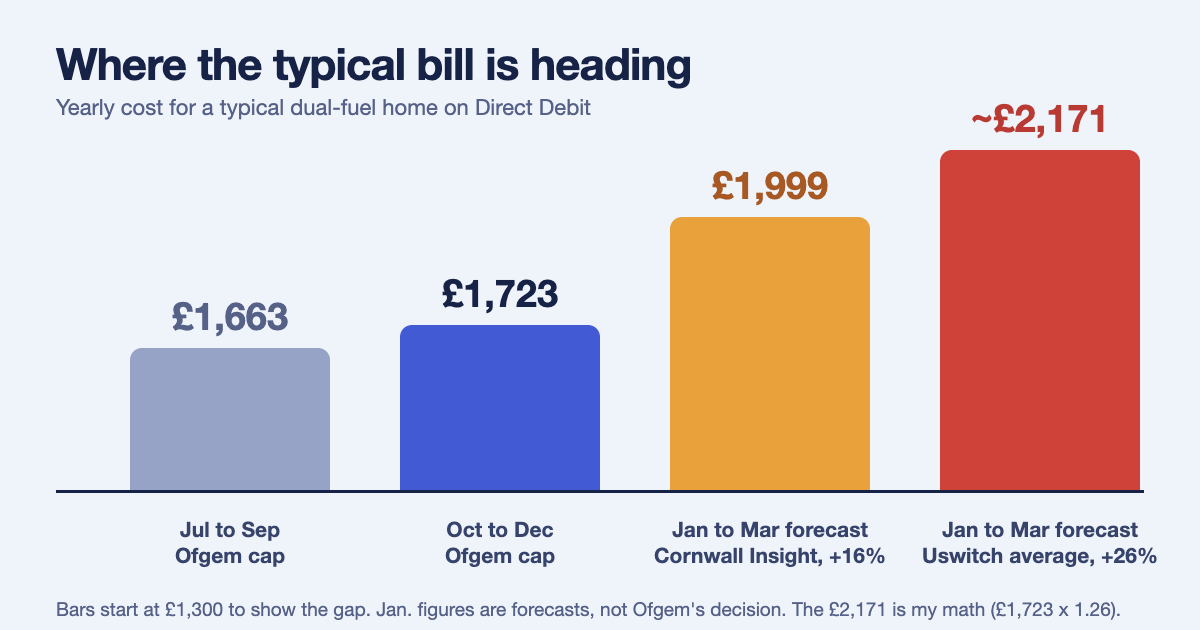
Both sources agree on why. Ofgem builds the wholesale part of the cap from prices in a set window, Aug. 19 to Nov. 17, and Cornwall says September’s rises are already locked in. Uswitch calls an increase “all but certain”, with only the size unknown. Ofgem announces the cap on or before Nov. 25.
What the extra cost looks like
Here is my math, using the £1,723 cap as the starting point. Your own bill will differ, because the cap limits the price per unit, not your total.
| Scenario | Yearly cost | Extra per year | Extra per month |
|---|---|---|---|
| Cornwall Insight, +16% | £1,999 | £276 | about £23 |
| Uswitch average, +26% | about £2,171 | about £448 | about £37 |
Besides, winter is when you use the most energy, so the real hit in January to March is bigger than a flat monthly split. Uswitch adds that the government is looking at support options, but nothing is confirmed. Ofgem’s own release notes that VAT is already off electricity bills.
UK winter energy outlook: what I would do before January 1
None of this is financial advice. It is the order I would go in.
- Check your tariff first. The cap only protects people on default tariffs, which Ofgem says is about 22 million households. Around 11 million are on fixed deals and will not feel the January change until those end.
- Compare fixed deals now. Ofgem said in August that fixes were £100 or more below the October cap. Uswitch says fixes usually beat the cap and lock in your rate. Prices move with wholesale markets, so check today’s deals instead of trusting my number.
- Ask about smart meter tariffs. Ofgem notes that many suppliers sell cheaper electricity off-peak to smart meter customers.
- Look at how you pay. Ofgem says prepayment customers on the cap pay about £45 a year less than Direct Debit customers.
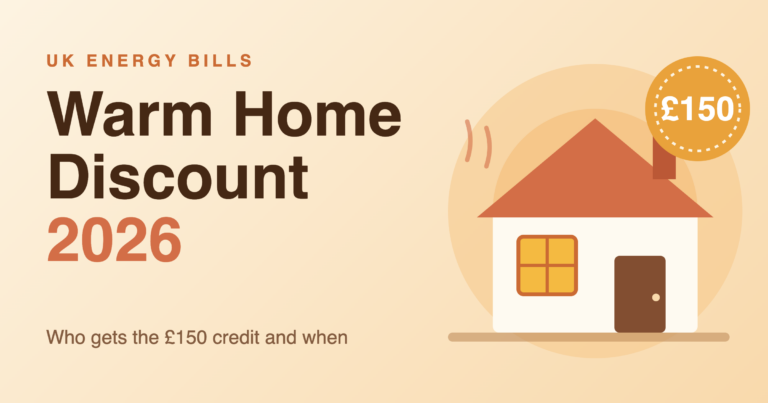
- Check for support. Uswitch lists the Warm Home Discount, the Winter Fuel Payment and Cold Weather Payments. I covered the first one in my Warm Home Discount post.
- Take a meter reading on Dec. 31. That is my habit, so the old and new rates get split at the right point.
Fixed tariff catches to know
First, a fix is a bet. Money to the Masses points out that if wholesale prices fall, you could end up paying more than the standard rate. Also, leaving early can cost an exit fee. Then again, with forecasts moving up, many people will happily take that trade for peace of mind.
Do you need to prepare for blackouts?
Probably not in any dramatic way. A small kit is cheap, though: a torch, a charged power bank and a few non-perishables. I put a longer list in my Be Ready checklist.
Where the UK winter energy outlook leaves us
Honestly, I find the supply news reassuring and the price news annoying. The grid probably holds. Even so, January is already a tight month for many households, with cold weather and Christmas bills landing together, and Cornwall’s own analyst said as much.
So my plan is simple. I would check my tariff this weekend, compare fixes before Nov. 25 and watch Ofgem’s announcement. If the forecasts are right, the people who moved early will thank themselves in January.
The short version
The grid operator says the lights will stay on this winter, but forecasts point to a 16% to 26% price cap rise from Jan. 1. Ofgem confirms the number by Nov. 25, so check your tariff and compare fixed deals before then.