Shamonda Virus: What the First Human Case in France Means
Shamonda virus was not on my radar until it appeared in Australia’s Google Trends list on October 23, right after French authorities announced the first human case. I wanted to know how worried a normal person should be. So I read the ECDC statement, the WOAH Q&A page, the German FLI page, the UN News report and the Reuters explainer. However, most headlines were scarier than the sources behind them.
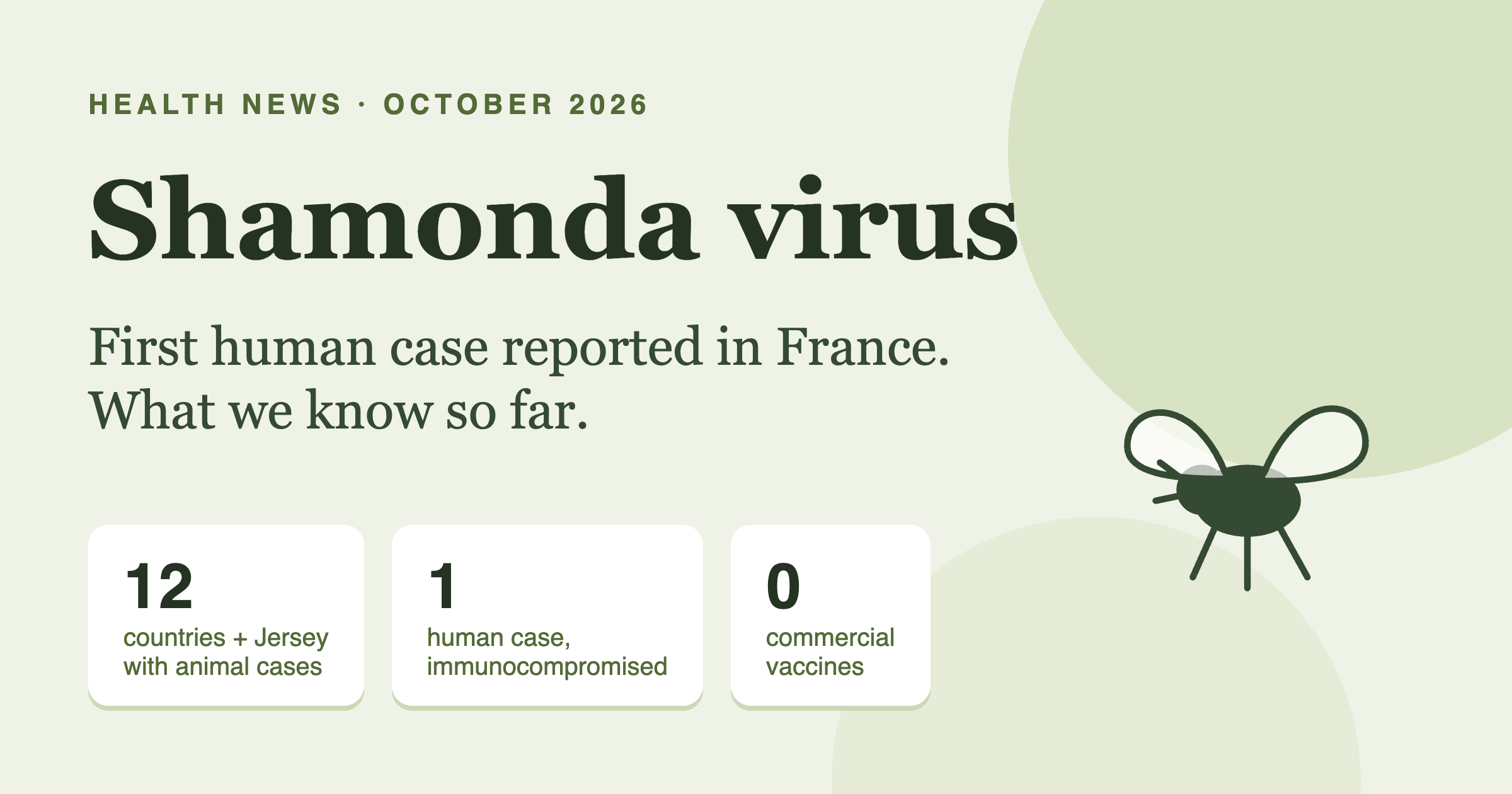
The quick answer: a patient in France who was severely ill and immunocompromised died in early October, and officials now link a midge-borne livestock virus to the case. Also, the WHO calls it an isolated case that is unlikely to spread widely at this time. Still, the story has a second half about cattle and missing data that I think deserves more attention.
What happened with the Shamonda virus in France
First, the sequence matters, because the human case came at the end of a summer of animal outbreaks. Here is the timeline from the official pages.
| When | What happened | Source |
|---|---|---|
| June 2026 | Clinical signs appear in European farm animals | ECDC |
| Late July | Scientists identify the virus in Europe for the first time | ECDC |
| Early August | Germany’s FLI identifies the virus in cattle in the south of the country | FLI |
| Early October | The French patient dies | ECDC |
| October 22 | French ministries announce the first known human infection, and ECDC and WHO respond | ECDC, UN News |
In addition, France said the virus had probably circulated in the country since spring. That detail matters because the animals were sick for weeks before anyone put a name on it.
What Shamonda virus is and how it spreads
Shamonda is an orthobunyavirus in the Simbu group, the same group as Schmallenberg virus. Nigeria reported it in cattle in 1965, and Africa and Asia have seen it since then. Europe is the new part.
How Shamonda virus spreads
Biting midges (Culicoides) carry it. ECDC says the specific midge species involved in Europe is still unknown. Also, ECDC notes that most midge species are getting less active as temperatures drop, so the risk window is closing for this year.
What it does to animals
The virus hits cattle most often, but it has also infected sheep, goats, horses and alpacas. Reported signs include fever, diarrhoea and lower milk output. In addition, some animals had abortions and severe foetal malformations, and a few horses showed neurological problems. However, WOAH says the full effect of the two European variants (SHAV-EU1 and SHAV-EU2) is still unknown.
Should people worry about Shamonda virus?
Not much, based on what officials have said so far. First, French authorities said they have found no health risk to the general public. Then the WHO said this looks like an isolated case. Also, Germany’s FLI says Simbu group viruses are generally not considered zoonotic and do not pose a significant infection risk to humans.
Still, I would not wave it away. The French patient’s brain complications were “very likely” linked to Shamonda, according to the authorities. Meanwhile, ECDC says the investigation into whether the virus caused or contributed to the death is still running. The table below separates what officials have settled from what they have not.
| Known so far | Still unknown |
|---|---|
| One human case, in a patient with a severely weakened immune system | Whether the virus caused or contributed to the death |
| The patient was in an area where the virus circulated in animals and midges were present | How the person was actually infected |
| The WHO considers it an isolated case, unlikely to spread widely at this time | What symptoms the virus causes in people, because it has never been documented before |
| No commercial vaccine exists for animals or people | Whether the European variants behave differently in naive cattle herds |
My read: one case in one person with a badly weakened immune system tells us the virus can, rarely, reach people. It does not tell us it spreads between people or that healthy people face the same risk. Instead of the headline question “is it dangerous to humans?”, I would ask “who is exposed to midges in affected regions, and how many people were tested?” Nobody has answered the second part yet, as far as I can tell.
The Shamonda virus data gap nobody talks about
Here is the detail from the Reuters explainer that stuck with me. WOAH does not list Shamonda as a disease, so countries do not have to notify WOAH of cases. Also, the EU Animal Health Law does not list it, so there is no mandatory EU surveillance. Because of this, the available data may give an incomplete picture of its spread.
In other words, “12 countries plus Jersey” is probably a floor, not a count. ECDC lists Austria, Belgium, France, Germany, Ireland, Italy, Liechtenstein, Luxembourg, the Netherlands, Portugal, Spain and Switzerland, plus Jersey. However, a country that does not test will not appear on that list. I would treat any map of this outbreak as a map of who is looking.
Why Schmallenberg is the comparison everyone makes
Schmallenberg virus appeared in the Netherlands and Germany in 2011. According to the UK’s AHDB, it reached Britain in 2012/13 on windblown midges, and the agency confirmed it on 656 holdings. Its biggest problem was that it crosses the placenta and harms the foetus. That is why the FLI asks vets to examine miscarriages, stillbirths and malformed calves or lambs with particular care.
However, I would not assume Shamonda follows the same path. WOAH says outbreaks of Simbu viruses tend to come in cycles that follow midge seasons. Also, the FLI says existing Schmallenberg immunity seems to give little cross-protection. So, in my view, the real test comes next spring, when midges return and farms learn how many animals are still susceptible.
What to do about Shamonda virus right now
If you farm or work with livestock
Report abortions, stillbirths and malformed newborn animals to your vet, since diagnosis needs lab tests (PCR or antibody tests). In fact, WOAH says the clinical signs are too unspecific to confirm Shamonda by eye.
If you are a general reader
No official page I read gave advice for the public, and the authorities say there is no identified risk. So I would keep it simple (for another health scare that called for calm, see my toothpaste recall post). Follow ECDC and your national health agency, and ignore posts that call this a pandemic threat. Also, if you are immunocompromised and live near affected farms, I would ask my doctor whether insect-bite protection is worth it. That is my own reading, not official guidance.
Where to check for updates
Start with the WOAH Shamonda page, which promises updates as new information arrives. Then check the ECDC news page for the investigation into the French case.
Quick answers
Is Shamonda virus dangerous to humans?
There is one documented human case, in a severely immunocompromised patient who died. However, the WHO calls it isolated, and French authorities report no identified risk to the general public.
Can I get Shamonda virus from milk or meat?
None of the official pages I read addressed milk or meat, so I cannot answer that from the sources. The authorities only say that they have identified no health risk to the general public so far.
Is there a vaccine?
No. WOAH says there are currently no commercially available vaccines against Shamonda virus.
Which countries have found Shamonda virus in animals?
According to ECDC, Austria, Belgium, France, Germany, Ireland, Italy, Liechtenstein, Luxembourg, the Netherlands, Portugal, Spain and Switzerland, plus Jersey. Because surveillance is not mandatory, the real number could be higher.
Is it the same as Schmallenberg virus?
No, but they belong to the same Simbu group, and both spread through midges. Shamonda also links to abortions and malformations in animals.
The short version
A midge-borne cattle virus has now infected one severely ill person in France, but the WHO calls it isolated and officials see no risk to the general public. Meanwhile, because Shamonda is not under mandatory surveillance, the real spread in animals is unknown, so watch the midge season next spring.